Hair Guide June, 2026 · 10 min read
The wolf cut has dominated salon chairs and social media feeds for good reason. This hybrid style — part shag, part mullet, entirely rebellious — delivers a striking silhouette that feels both retro and razor-sharp. But like any bold hairstyle, its success depends heavily on how well it's tailored to your individual bone structure. For those with diamond face shapes, characterized by narrow foreheads and jawlines offset by wide, sculpted cheekbones, the wolf cut presents a particularly exciting opportunity. Done correctly, it can soften angular features, add dimension where you want it, and create an effortlessly cool aesthetic that turns heads everywhere you go.
This comprehensive guide breaks down everything you need to know about adapting the wolf cut to complement a diamond face shape. From layer placement and fringe selection to daily styling techniques and product recommendations, consider this your definitive roadmap to pulling off one of the most talked-about hairstyles of the decade.
✨
Not sure about your face shape? Take our quick face shape analysis to find out before you commit to a cut.
Take the QuizUnderstanding the Diamond Face Shape
Diamond face shapes are among the rarest and most striking facial structures. The defining characteristics include a narrow forehead that transitions into prominent, wide cheekbones, then tapers down to a delicate, pointed chin. Think of celebrities like Zendaya, Rihanna, or Megan Fox — all classic examples of diamond face geometry that commands attention.
The key challenge when styling hair for a diamond face is achieving visual balance. Because the cheekbone area is the widest point, hairstyles that add too much volume at the sides can exaggerate this width and make the face look disproportionate. Conversely, styles that are too flat or pulled back can make the forehead appear overly narrow and the chin too sharp. The goal is to create width at the forehead and jaw areas while softly framing those gorgeous cheekbones rather than competing with them.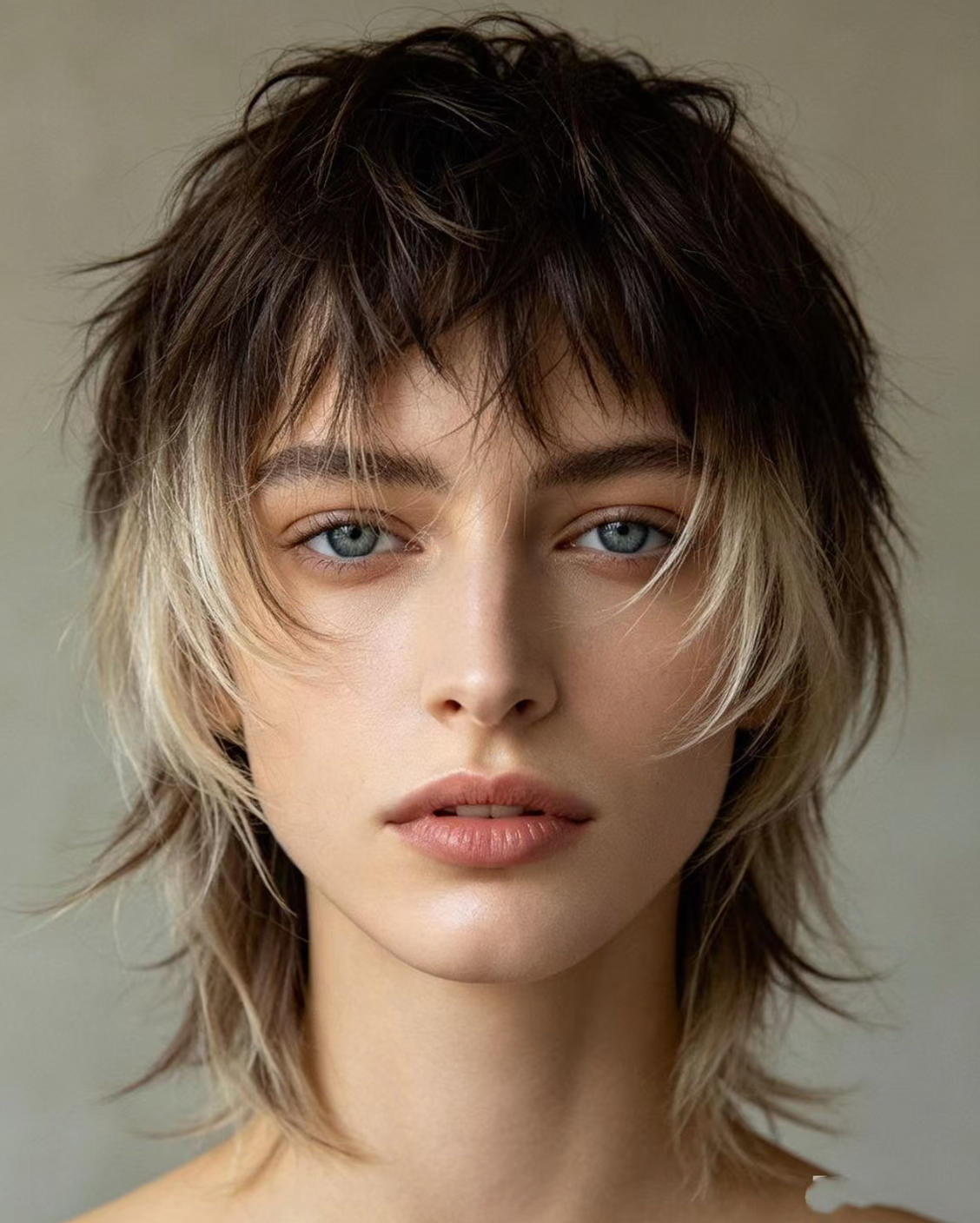 Wispy, face-framing layers soften the cheekbone area without adding unwanted width.
This is precisely where the wolf cut shines. Its signature combination of short, textured layers on top and longer, flowing pieces through the back and sides creates a framework that can be customized to address the exact balancing needs of a diamond face. The volume sits on top — widening the forehead visually — while the longer layers can be directed to add subtle fullness around the jawline, creating a more oval-like illusion that enhances your natural beauty.
The Anatomy of a Diamond-Optimized Wolf Cut
A wolf cut designed for a diamond face shape isn't a one-size-fits-all proposition. Several structural elements must work in harmony to produce a flattering result. Understanding these components will help you communicate effectively with your stylist and ensure you walk out of the salon with a cut that genuinely works for your face.
Crown Volume and Top Layers
The crown area is where the wolf cut does its most important work for diamond faces. Short, choppy layers starting from the crown create the height and volume that visually broaden the forehead region. Your stylist should cut these layers at varying lengths — typically between two and five inches — to create that signature lived-in, piece-y texture. The key is that the shortest layers should sit around the parietal ridge, building a natural scaffold of volume that doesn't collapse throughout the day.
Face-Framing Curtain Layers
Perhaps the most critical element for diamond faces, the face-framing layers should begin around the cheekbone area and angle downward toward the collarbone. These curtain-like pieces serve a dual purpose: they draw the eye vertically rather than horizontally, which elongates the face, and they gently soften the transition from wide cheekbones to narrow chin. Ask your stylist for long, blended face-framers rather than blunt, cheekbone-width pieces that could amplify width.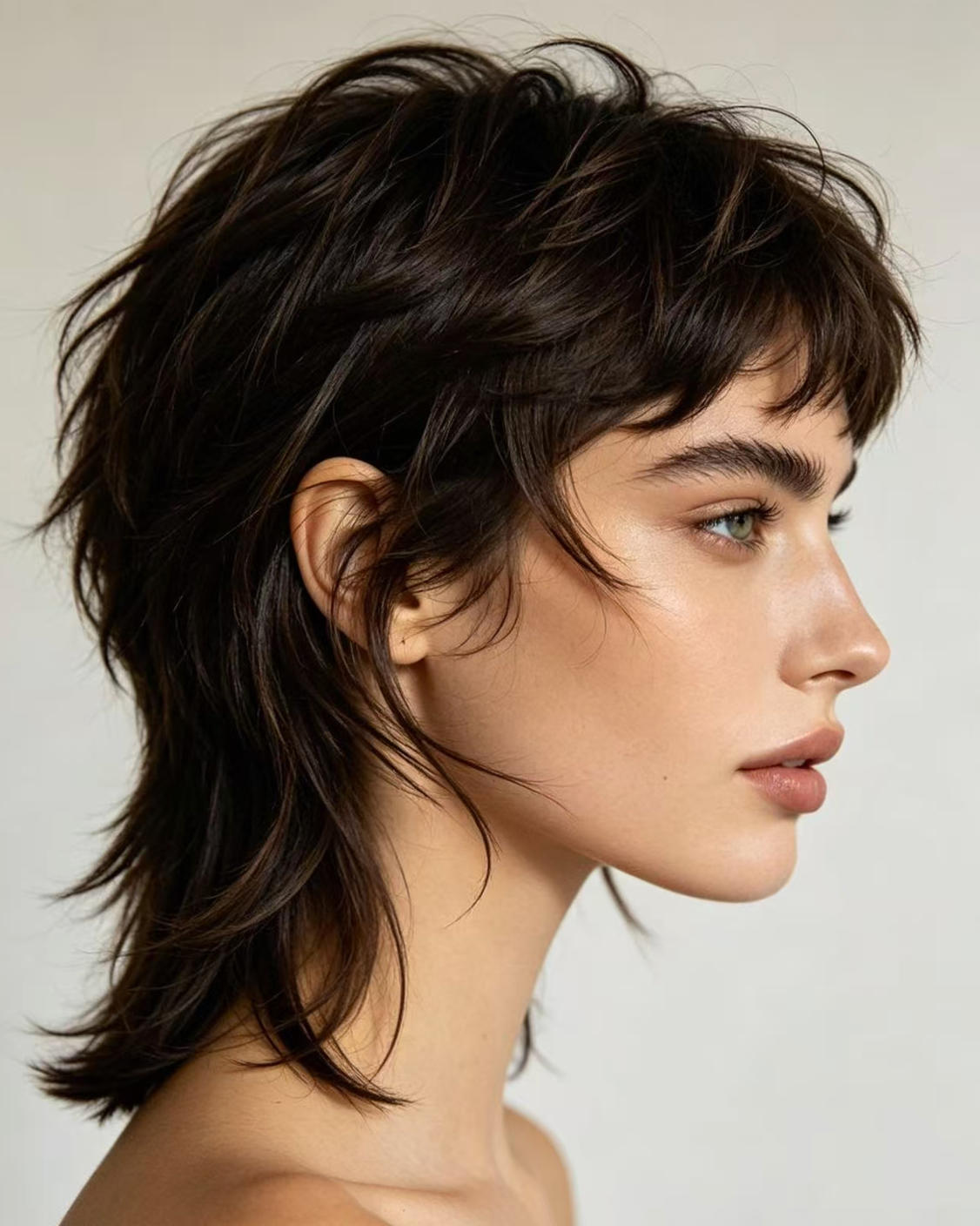 The side profile reveals how crown layers create height while face-framing pieces elongate the silhouette.
The Mullet Tail
The back is where the "mullet" aspect of the wolf cut comes into play, and for diamond faces, this is an asset. The longer layers at the nape of the neck add visual weight to the lower portion of the face, helping to balance the naturally narrow jawline. These back layers should be texturized rather than blunt-cut, creating movement and a soft, feathered finish that avoids a heavy, triangular shape. Ideally, the longest back pieces should fall between the chin and collarbone.
Fringe and Bang Options
Bangs can make or break a wolf cut on a diamond face. The most universally flattering option is a curtain bang that parts in the middle or slightly off-center and sweeps outward at the cheekbone level. This style adds width to the forehead — exactly where diamond faces need it — while creating elegant, face-slimming lines. Wispy, textured fringe is another strong choice, as it breaks up the narrowness of the forehead without creating a harsh horizontal line. Avoid thick, blunt bangs, which can make the face appear shorter and emphasize the angularity of the cheekbones.
✂️
Ready to try a new look? Upload a photo and see how different wolf cut styles look on you before visiting the salon.
Try AI HairstyleWolf Cut Variations That Flatter Diamond Faces
Once you understand the foundational principles, there are several exciting variations to explore. Each puts a slightly different spin on the wolf cut while maintaining the structural elements that complement diamond face geometry.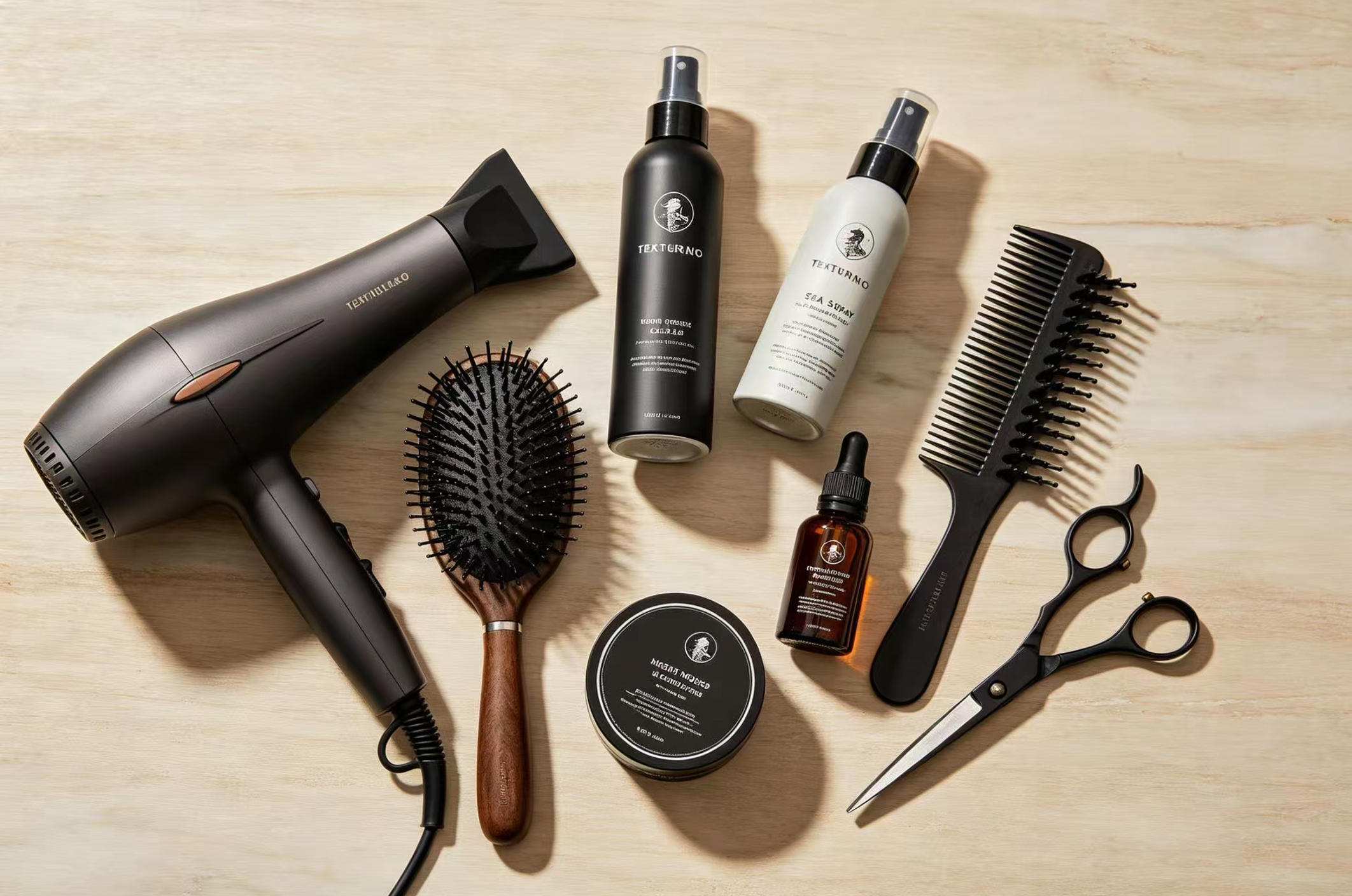 The right tools and products are essential for maintaining your wolf cut's shape and texture.
The Soft Wolf
Features more blended, less dramatic layering with gentle face-framing pieces. Ideal if you want a subtler take on the trend that still provides cheekbone-softening benefits. The transitions between short and long layers are more seamless, creating an elegant, wearable look suitable for professional environments.
The Shag-Wolf Hybrid
Leans heavily into the shag lineage with more pronounced, choppy layers throughout. This variation maximizes crown volume and texture, making it perfect for diamond faces that need extra width at the forehead. Pair with wispy, separated bangs for maximum impact.
The Korean Wolf Cut
Popularized by K-pop idols, this version features softer, more polished layers with a focus on sleek texture rather than messy volume. The face-framing pieces are typically longer and more blended, creating an elegant, elongating effect that beautifully suits diamond face structures.
The Textured Crop Wolf
A shorter, edgier take that keeps the wolf cut's signature silhouette but with a cropped back that hits above the shoulders. This works well for diamond faces because the concentrated texture on top still creates forehead width, while the shorter back keeps the overall look light and modern.
Styling Techniques for Maximum Impact
A great cut is only half the equation. How you style your wolf cut on a daily basis will determine whether it enhances your diamond face shape or falls flat. Here's a step-by-step approach to styling that consistently delivers results.
Start with damp, towel-dried hair and apply a lightweight volumizing mousse from roots to mid-lengths. This creates the foundational body your crown layers need to maintain their shape. Avoid applying heavy products to the ends, as this can weigh down the textured layers and reduce the movement that makes the wolf cut visually interesting.
Blow-dry using a round brush, directing the crown layers upward and slightly back to maximize lift at the roots. For the face-framing pieces, use the brush to create a slight bend away from the face — this opens up the cheekbone area and prevents the hair from lying flat against the skin. A medium-hot setting with a cool shot at the end will set the shape without causing heat damage.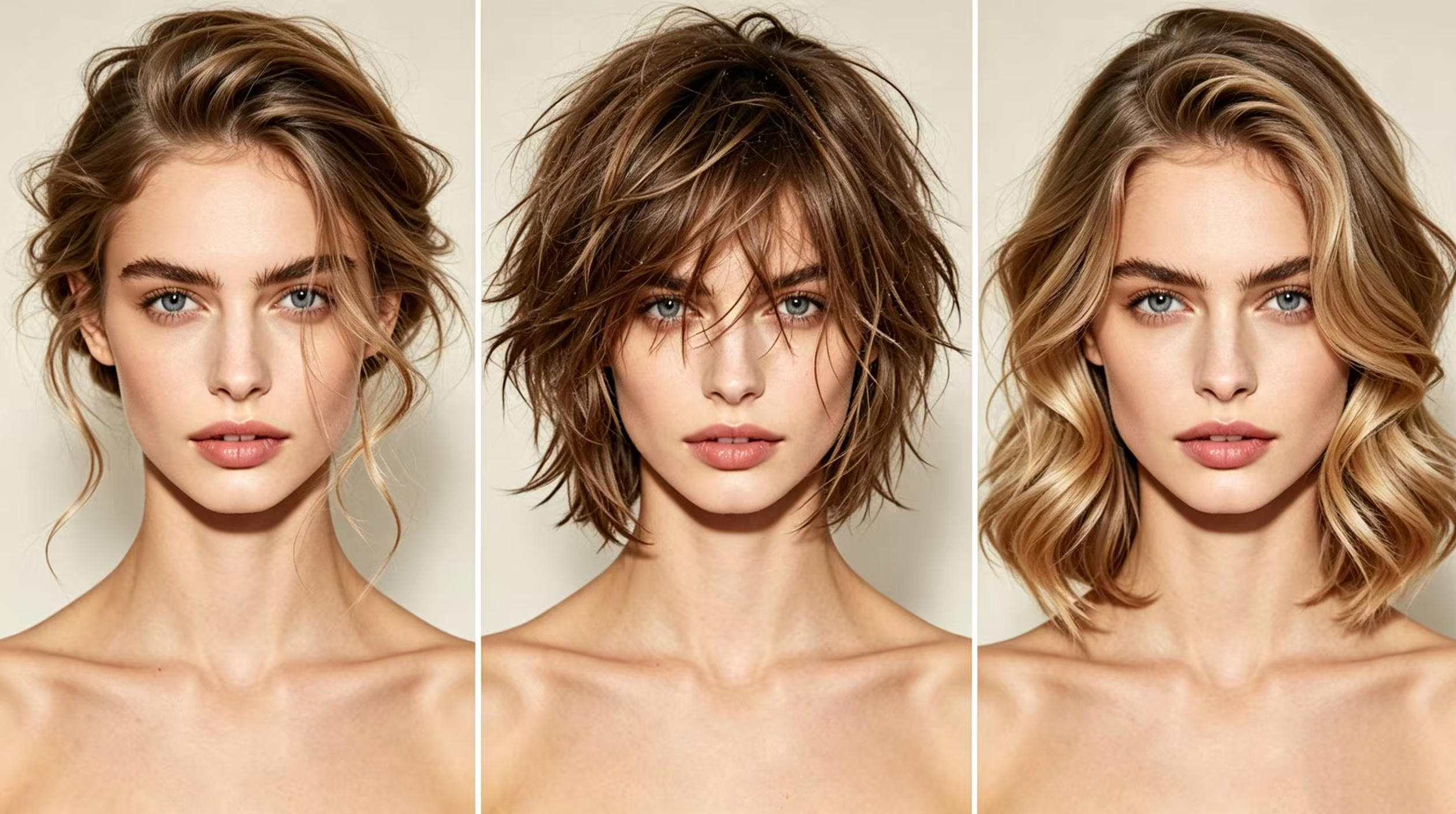 Three variations — soft, textured, and polished — demonstrate the wolf cut's versatility for diamond face shapes.
Once dry, use a texturizing spray or sea salt spray to enhance the piece-y, separated quality of the layers. Spray from mid-lengths to ends and scrunch gently with your fingers. For the crown area, a light dusting of texturizing powder at the roots can add lasting volume without the stiffness of hairspray.
For a sleeker, more polished look, you can run a flat iron through the face-framing layers, creating a soft bend rather than a sharp curl. The key is to keep the texture looking effortless and undone — the wolf cut should never look overly styled or rigid, as that defeats its rebellious, carefree essence.
💡 Pro Styling Tips for Diamond Faces
- Always direct volume upward and outward at the crown to widen the forehead visually.
- Keep face-framing layers smooth and directed downward to elongate the face.
- Avoid excessive volume at the cheekbone level — this is where your face is already widest.
- Use lightweight products; heavy pomades or waxes can flatten the textured layers.
- Refresh second-day hair with dry shampoo at the roots for instant crown volume.
- Consider sleeping with hair in a loose, high ponytail to preserve layer shape overnight.
Essential Products for Your Wolf Cut Arsenal
Building the right product lineup doesn't require a massive investment, but choosing formulas suited to textured, layered cuts makes a noticeable difference. Here are the categories you'll want in your routine.
A volumizing mousse is non-negotiable for wolf cut styling. Look for formulas that provide hold without crunch — modern mousses have come a long way from the stiff, sticky products of decades past. Apply generously to damp hair before blow-drying for the best results.
Texturizing spray is your best friend for day-to-day styling. It enhances the separation between layers, adds grit for better hold, and gives the hair that perfectly undone, lived-in quality the wolf cut is famous for. Sea salt sprays are a great alternative if you prefer a more natural finish with a slight matte quality.
A quality heat protectant should be part of any styling routine that involves hot tools. Choose a lightweight spray formula that won't weigh down your layers or leave residue that dulls the hair's natural movement. Apply before any blow-drying or flat iron work.
For finishing, a flexible-hold hairspray or a light texturizing powder works best. Avoid anything labeled "maximum hold" or "ultra strong," as these tend to create a helmet-like finish that destroys the effortless movement central to the wolf cut's appeal. A texturizing powder applied sparingly at the crown roots can provide all-day volume with zero visible product.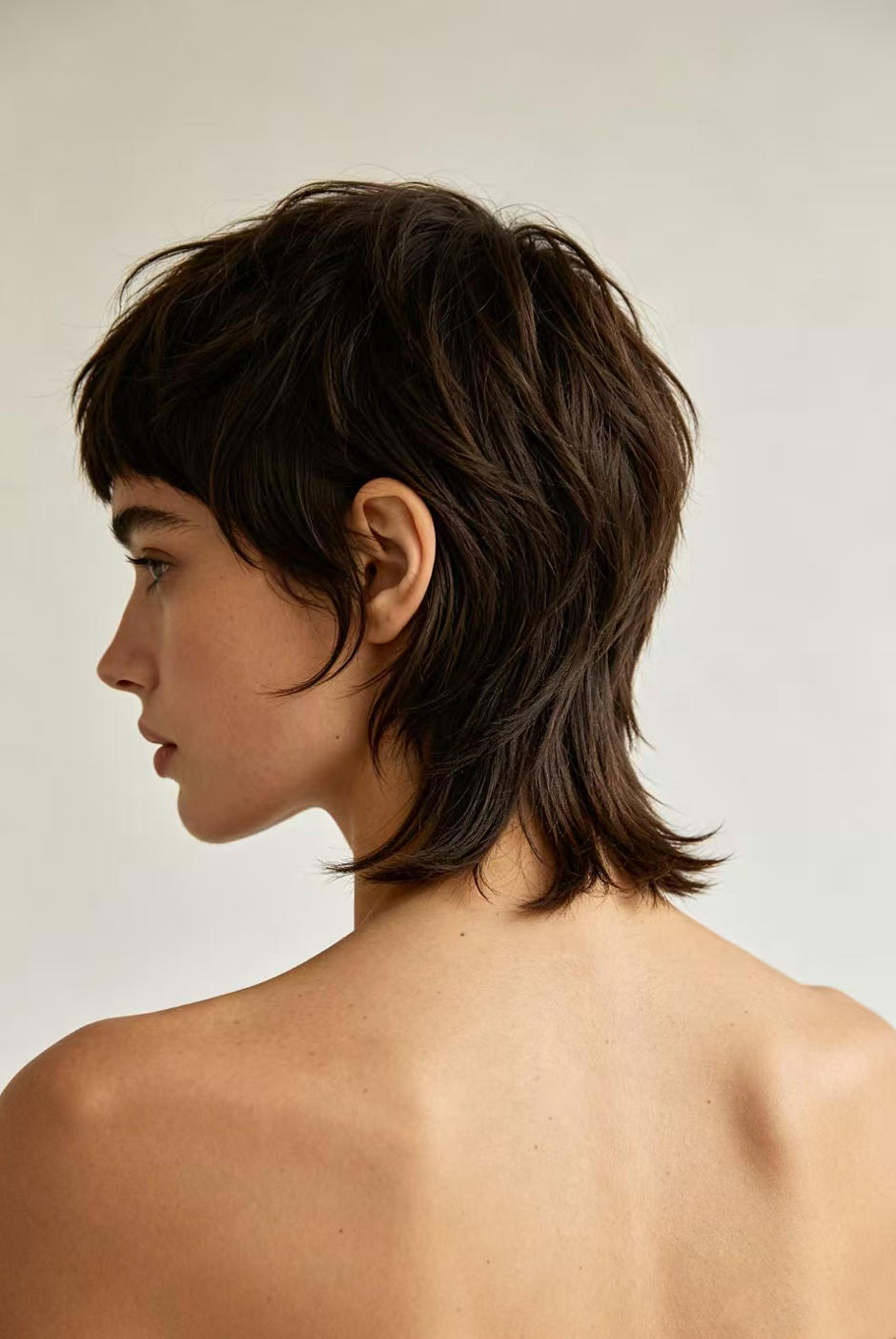 The back view reveals the texturized nape layers that add visual weight below the jawline — key for balancing diamond faces.
Maintenance and Salon Visits
The wolf cut grows out surprisingly gracefully compared to more structured hairstyles, thanks to its intentionally messy, layered design. However, regular maintenance is still important to keep the proportions flattering for your diamond face shape. Plan to visit your stylist every eight to ten weeks for a trim.
During these visits, the focus should be on maintaining the crown layer length — if these grow too long, you'll lose the volume that's critical for balancing your forehead width. The face-framing pieces should also be kept in check, as they can start to pull the silhouette downward rather than elongating it once they grow past the collarbone.
Between salon visits, you can maintain the shape by carefully point-cutting any pieces that start to feel too heavy or blunt around the face. Use sharp hair shears — never regular scissors — and cut into the ends at an angle rather than straight across. This preserves the textured, piece-y finish that defines the style.
The wolf cut isn't just a hairstyle — it's an attitude. When tailored to your diamond face shape, it becomes a powerful tool for highlighting your most striking features.
Common Mistakes to Avoid
Even with the best intentions, certain missteps can undermine your wolf cut's ability to flatter a diamond face shape. Being aware of these pitfalls will help you avoid them from day one.
The most common error is allowing too much width at the cheekbone level. Whether from improper blow-drying technique, the wrong product, or layers that were cut too short around the face, this amplifies the widest part of a diamond face and throws off the visual balance the cut is supposed to create. Always direct styling energy toward the crown and away from the cheekbone area.
Another frequent mistake is cutting the fringe too short or too thick. A heavy, blunt bang that ends above the eyebrows shortens the face dramatically and draws all the attention to the mid-face area — exactly what diamond faces want to avoid. If you want bangs, keep them wispy, textured, and long enough to sweep past the cheekbones.
Finally, neglecting the back layers is a mistake that undermines the entire mullet component of the wolf cut. The nape area needs texturizing and occasional trimming to maintain its feathered, movement-rich appearance. If the back grows out into a heavy, blunt mass, it loses its ability to add visual weight below the jawline, which is essential for diamond face balance.
Own Your Look with Confidence
At the end of the day, the most important ingredient in pulling off any hairstyle is confidence. The wolf cut, with its bold, unapologetic silhouette, rewards those who wear it with self-assurance. When you understand how the cut works with your diamond face shape — the crown volume that broadens your forehead, the face-framing layers that elongate your features, the textured back that balances your jawline — you can step out knowing every element is working in your favor.
Whether you opt for a soft, blended interpretation or a full-throttle, heavily textured version, the principles remain the same: create width where you're narrow, soften where you're angular, and always keep the styling effortless and alive with movement. The wolf cut was never meant to be perfect or polished — it was designed to be wild, expressive, and unapologetically you.
Book a consultation with a stylist who understands face shape geometry, bring reference photos that speak to your personal aesthetic, and don't be afraid to experiment. After all, hair grows back, but the confidence you gain from finding your signature look is permanent.
Ready to Find Your Perfect Wolf Cut?
Use our tools to discover the ideal style for your unique features before heading to the salon.